
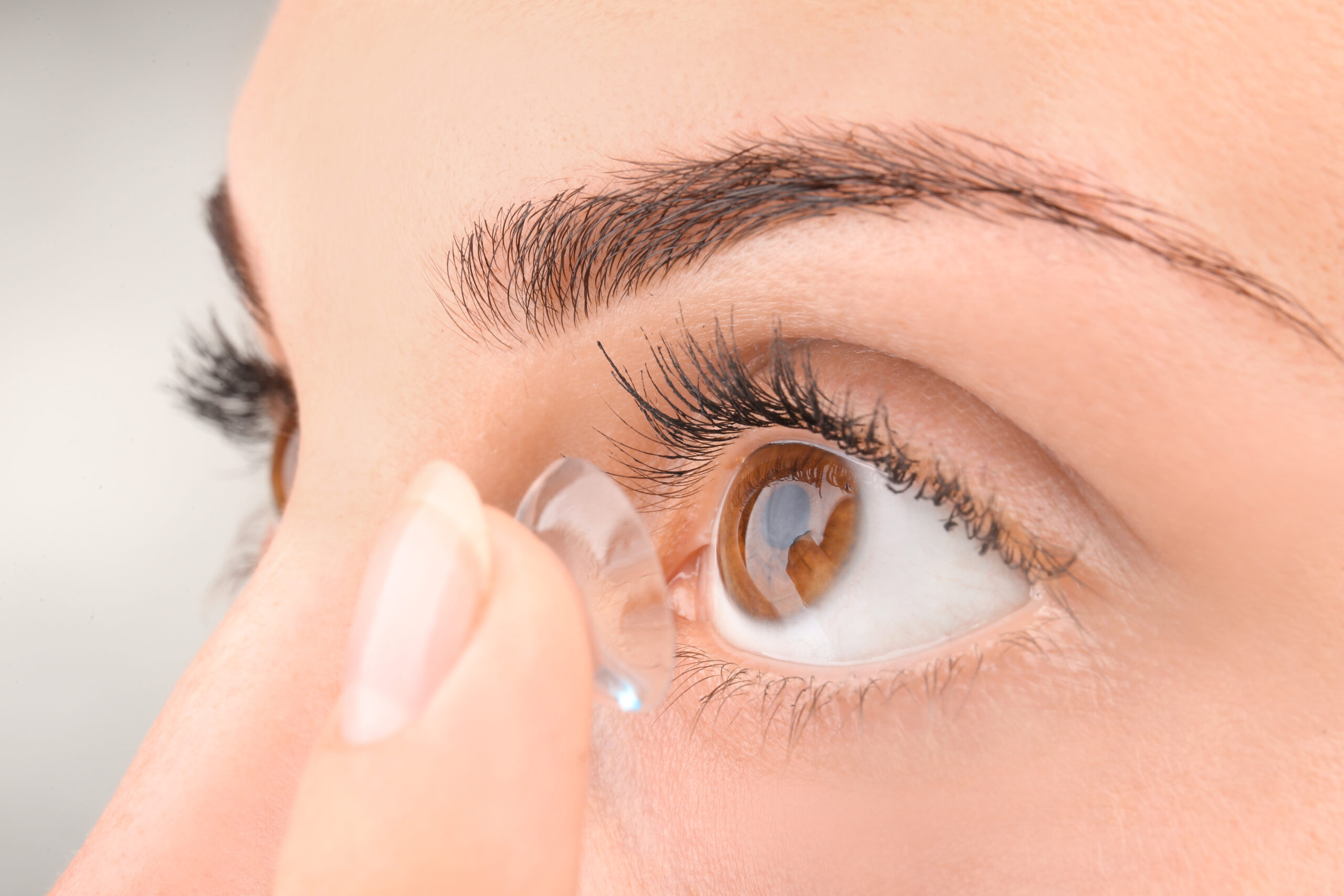
Glasses and Contact Lenses
Common Questions About Contact Lens Care
February 19, 2026
Contact lenses offer a convenient alternative to traditional eyeglasses, providing clear vision without the hassle of frames. However, many…
Read More
Astigmatism, which causes blurry vision and eye discomfort, affects millions of Americans, often impacting their daily activities. Even though this refractive error is usually easily managed with corrective lenses like contacts or glasses, we often hear concerns from patients about what their astigmatism will do over time. Will it get worse? Is there anything that can be done to improve the condition of astigmatism? How can a patient with astigmatism maintain their best vision health? At Hill Vision Services, we answer these questions every day for our patients, and we are happy to share with anyone who is looking for answers. Let us serve as your guide to an astigmatism diagnosis, including how to manage this condition for the long term.
Astigmatism occurs when either the cornea (the clear front surface of the eye) or the lens inside the eye has an irregular shape. Unlike a perfectly round eye, an eye with astigmatism has a more oval or football-like shape in certain areas. This irregular curvature prevents light from focusing properly on the retina. As a result, images appear blurry or distorted at any distance, not just near or far. Many people with astigmatism also have other refractive errors, such as nearsightedness (myopia) or farsightedness (hyperopia). There are two main types of astigmatism:
Both types create similar vision problems, but they may require different treatment approaches.
Recognizing astigmatism can be challenging because its symptoms often develop gradually. It’s easy to overlook astigmatism signs, and many people don't realize they have a vision problem until it begins to interfere with daily activities. Common symptoms of astigmatism include:
The only reliable way to diagnose astigmatism is through a comprehensive eye examination with an optometrist or ophthalmologist. During this exam, your eye doctor will use various tools to measure your cornea's curvature and assess how your eyes focus light.
“Can astigmatism get worse?” We hear this question a lot, especially from newly diagnosed patients. Unfortunately, the answer is yes—astigmatism can indeed change and progress over time. That does not mean that worsening astigmatism is always inevitable for every patient. Our eyes often undergo small changes that can impact our vision. Like other aspects of vision and eye health, astigmatism can fluctuate and change during your lifetime. Some people will experience very little change in their astigmatism over their lifetime, but others may experience gradual changes that require them to update the part of their vision prescription that addresses astigmatism. Regular eye examinations are essential for monitoring these changes and ensuring your corrective lenses provide optimal vision. Most eye care professionals recommend annual check-ups, though your doctor may suggest more frequent visits if you have significant astigmatism or other eye conditions.
Several factors can contribute to worsening astigmatism. Understanding these can help you take proactive steps to preserve your vision health.
There is good news about astigmatism: Modern vision care offers several effective options for correcting astigmatism and restoring your clear vision. The right approach to correcting astigmatism depends on your specific situation, as the severity of your condition and your lifestyle will be unique to you.
The simplest and most common treatment for astigmatism is a prescription lens designed to compensate for the irregular shape of your cornea. This helps your eye focus light properly on the retina. Lenses that correct for astigmatism generally don’t cost any more than a typical lens that corrects near or farsightedness. For contact lens wearers, several options address astigmatism:
Today's contact lens technology makes it possible for most people with astigmatism to wear contacts successfully, even those with moderate to high astigmatism.
Yes, LASIK can effectively correct astigmatism for many patients. This is a popular refractive surgery that reshapes the cornea using a precise laser. The result is that light can focus properly on the retina. Good candidates for LASIK with astigmatism typically:
At Hill Vision Services, our experienced surgeon uses state-of-the-art technology to perform LASIK for patients with astigmatism, often achieving dramatic improvements in vision quality and reducing or eliminating dependence on corrective lenses.
For patients who aren't candidates for LASIK, alternative surgical procedures may correct astigmatism:
Each option has specific benefits and considerations, which your ophthalmologist can discuss based on your eye health and vision needs.
For those who prefer non-surgical approaches, several options can help manage astigmatism:
These approaches may be particularly valuable for patients who aren't candidates for surgery or prefer to avoid surgical intervention.
While you can't completely prevent all changes in astigmatism, several strategies may help minimize progression.
Contact your eye care provider promptly if you experience:
These symptoms could indicate changes in your astigmatism or other eye conditions requiring immediate attention.
Astigmatism is a common and manageable vision condition that can change over time. It’s important to take care of your eyes throughout your lifetime, and you can do that more effectively when you understand what causes astigmatism to worsen. At Hill Vision Services, our team of experienced ophthalmologists and optometrists provides comprehensive care for patients with astigmatism and other refractive errors. From the latest diagnostic technology to advanced surgical options, we're committed to helping you achieve the clearest possible vision. With three convenient locations serving the Greater St. Louis community— Creve Coeur, MO, Lake St Louis, MO, and Glen Carbon, IL —expert eye care is never far away. Whether you're experiencing symptoms of astigmatism for the first time or seeking treatment for worsening astigmatism, we're here to help. Don't let astigmatism blur your view of life's important moments. Contact Hill Vision Services today at 314-567-7771 to schedule your comprehensive eye examination, or request an appointment online through our website. Our caring team is ready to help you see your best.
Contact lenses offer a convenient alternative to traditional eyeglasses, providing clear vision without the hassle of frames. However, many…
Read More“If I start wearing glasses, will my eyes get weaker?” This is a question we get asked all the time, and the short answer is no. Glasses…
Read MoreRecently, blue light glasses have become an incredibly popular way to mitigate the harmful effects of blue-violet light rays. As these…
Read MoreType to search across services, conditions, doctors, FAQs and resources.